 Charlotte Premier Water Damage Restoration
Mold Remediation Charlotte NC
IICRC Certified • Free Inspections • 24/7 Response • Serving the Greater Charlotte Area
Call (980) 319-1366 — Free InspectionMold remediation in Charlotte, North Carolina requires the same urgency as the water event that caused it. Even in Charlotte’s more moderate climate, mold can begin colonizing wet building materials within 24 to 48 hours — the same IICRC window that applies in any humid-summer market. Our IICRC-certified team provides professional mold removal in Charlotte NC, from initial inspection through containment, treatment, and post-remediation clearance testing following IICRC S520 protocols. Whether it’s post-flood mold after a tropical storm remnant or a chronic moisture problem from an undetected plumbing leak, we treat the source and restore the space. Call (980) 319-1366 for a free mold inspection.
Why Charlotte Homes Are Prone to Mold
Charlotte’s climate — hot, humid summers with peaks above 80% relative humidity — creates conditions for mold growth after water events, particularly in enclosed building assemblies. Unlike outdoor humidity, moisture trapped inside walls, under floors, and in attic spaces does not dissipate on its own. Charlotte’s older housing stock in neighborhoods like Plaza Midwood, Dilworth, Myers Park, and NoDa frequently includes inadequate vapor barriers, aging plumbing, and crawl spaces that are poorly sealed from ground moisture — all of which create chronic mold conditions unrelated to acute water damage events.
Post-storm mold is the most visible category. Tropical storm remnants — Florence in 2018, Matthew in 2016, Ian in 2022 — saturated homes across Mecklenburg County, and inadequate drying in the aftermath led to widespread mold cases weeks and months later. HVAC condensation, roof leaks, and bathroom moisture without adequate ventilation are the most common non-storm causes. Black mold removal in Charlotte NC is often triggered by a slow, undetected leak behind a wall that goes undiscovered until musty odor or visible discoloration appears.
Signs You May Need Mold Remediation in Your Charlotte Home
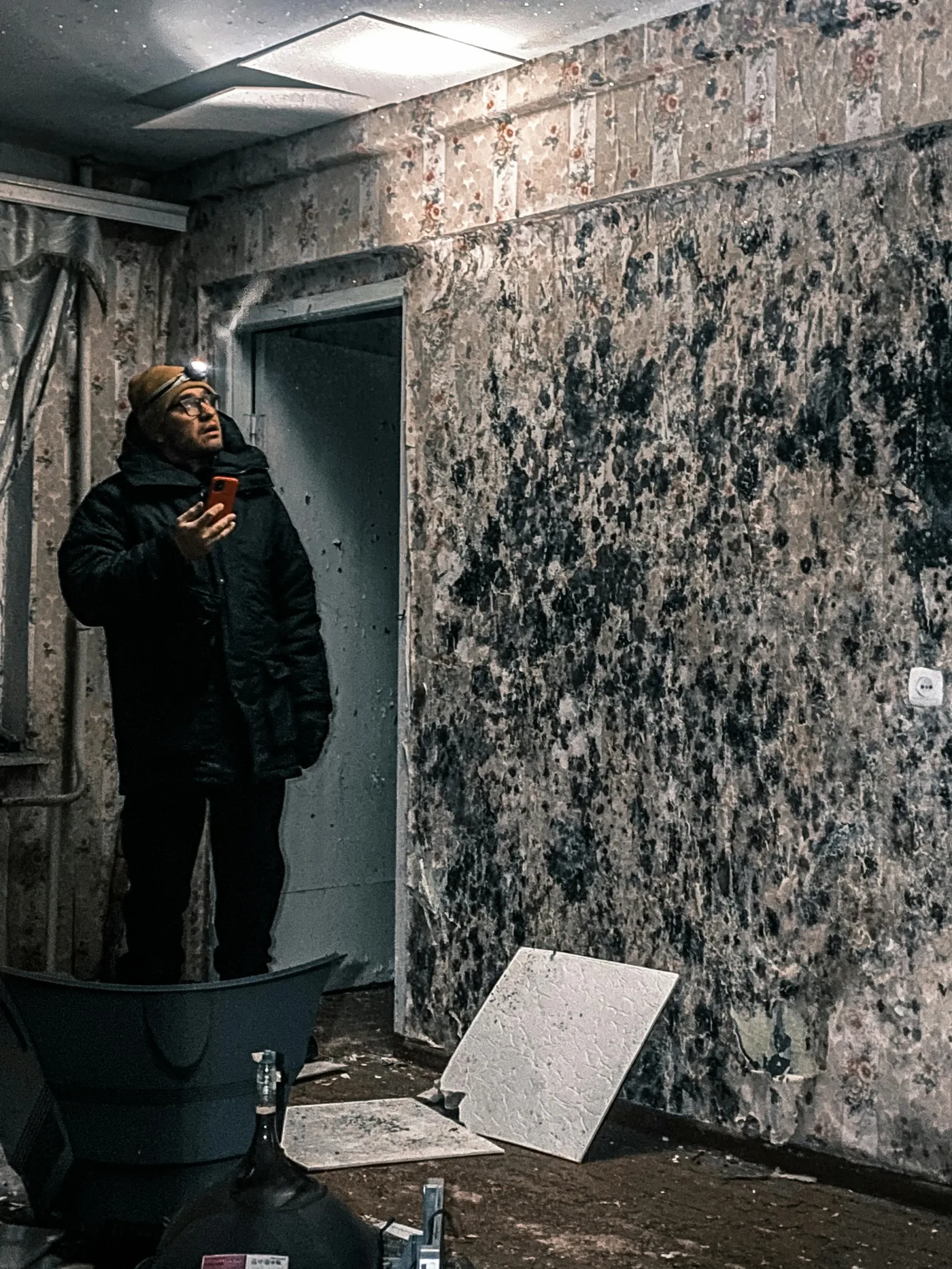
Visible mold growth — dark discoloration on walls, ceilings, or grout lines — is the most obvious sign. But mold often colonizes hidden surfaces first. Signs that warrant a professional mold inspection in Charlotte include:
- A persistent musty odor even after airing out the space
- Unexplained allergy or respiratory symptoms that worsen at home
- Water staining or bubbling paint that suggests moisture behind a surface
- Any confirmed water intrusion event that wasn’t professionally dried within 48 hours
- Signs of mold in walls — dark streaking or discoloration along baseboard lines
Attic mold removal in Charlotte is common after roof damage from severe thunderstorms and tropical storm remnants, since the attic is the first space to accumulate moisture from a compromised roof. Crawl space mold in Charlotte NC homes is also widespread — many older properties have vented crawl spaces with poor vapor barriers that accumulate ground moisture year-round.
Our Charlotte Mold Remediation Process
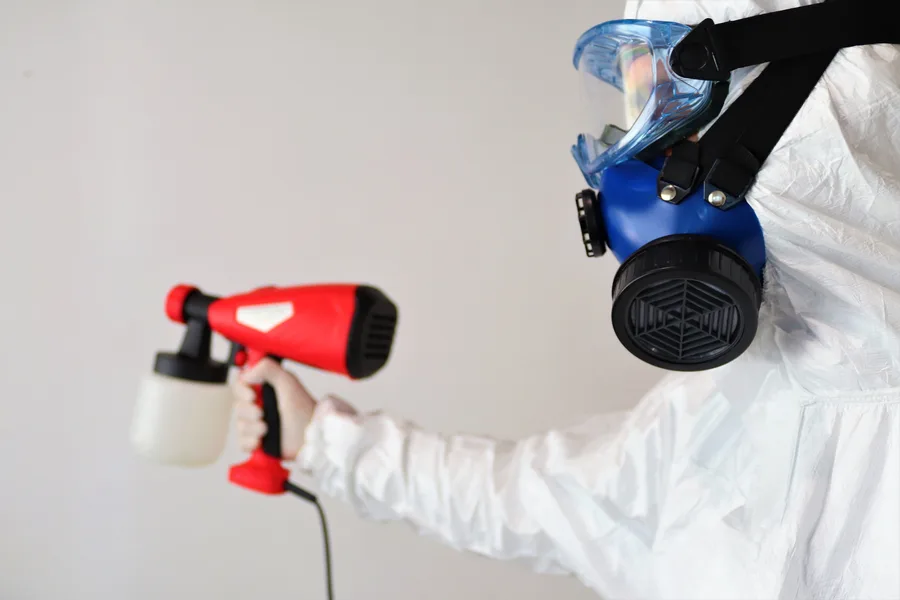
Professional mold removal follows IICRC S520 protocols. Our process:
-
Inspection & Moisture Mapping — We locate the mold and identify its moisture source using calibrated moisture meters and borescope cameras for concealed spaces.
-
Containment — We establish negative-air-pressure containment barriers using polyethylene sheeting to prevent spore migration during removal.
-
HEPA Filtration — HEPA air scrubbers run continuously throughout the project, capturing airborne spores at 99.97% efficiency at 0.3 microns.
-
Source Removal — Porous materials that cannot be cleaned (heavily contaminated drywall, insulation, wood framing with deep penetration) are removed. Non-porous surfaces are HEPA-vacuumed and treated.
-
Antimicrobial Treatment — EPA-registered antimicrobial solutions are applied to all treated surfaces.
-
Clearance Testing — Post-remediation verification confirms spore counts have returned to baseline before declaring the job complete. Clearance certificate issued.
Most residential mold remediation projects in Charlotte run 1 to 3 days. Attic projects with significant structural involvement can run 3 to 5 days. Post-remediation clearance sampling adds 24 to 48 hours for lab turnaround.
Professional Mold Removal in Charlotte, NC
We remediate mold in every area of Charlotte homes and businesses: interior walls and ceilings, attic spaces with post-storm roof damage, crawl space mold in Charlotte NC properties with vapor barrier failures, HVAC mold cleaning including duct systems where mold spores circulate through conditioned air, and bathroom mold remediation for chronic moisture environments.
The difference between mold removal and mold remediation is that removal addresses visible surface mold, while remediation addresses the source, the affected structure, and the air quality — all three. Surface-only cleaning fails because without source correction and structural drying, mold re-establishes within weeks.
For water damage that caused your mold problem, see our water damage restoration Charlotte NC page. If a sewage backup is involved, see our sewage cleanup Charlotte NC page.
Ready to schedule a free mold inspection in Charlotte?
(980) 319-1366 — Call NowServing Charlotte, Concord, Gastonia and the Greater Charlotte Area
Our Charlotte mold remediation team covers all of Mecklenburg County and the surrounding region — including mold remediation Concord NC, mold remediation Gastonia NC, Huntersville, Matthews, Mooresville, and all surrounding communities. For mold that followed a water damage event, start with our water damage restoration Charlotte North Carolina page — the two services frequently go together.
Get a Free Mold Inspection in Charlotte, NC
Visible mold is the tip of the iceberg. Call (980) 319-1366 for a free mold inspection — our IICRC-certified technicians will identify the moisture source, assess the extent of colonization, and walk you through your remediation options. No obligation.
Free Inspections • IICRC Certified (AMRT) • Post-Remediation Clearance Testing • Licensed & Bonded in North Carolina
Frequently Asked Questions About Mold Remediation in Charlotte
-
The first signs are usually odor — a musty, earthy smell that was not present before the water event. Visible discoloration on drywall, around window frames, or on wood surfaces follows. If you had water damage that was not professionally dried to IICRC drying goals, assume mold is possible and schedule an inspection.
-
Mold can begin establishing within 24 to 48 hours of a water event. Any wet material — drywall, insulation, and wood framing — is at risk from the moment the water event occurs. This is why professional drying equipment targeting below 60% indoor relative humidity is essential, not optional.
-
Mold removal addresses visible surface mold — wiping or cleaning what you can see. Mold remediation addresses the source of the moisture, the full extent of affected material (including hidden structural areas), and the air quality — all three. Surface-only cleaning fails because without source correction and structural drying, mold re-establishes within weeks.
-
An inspection is part of the remediation process itself — our technicians assess moisture sources and mold extent on arrival. You do not need a separate third-party inspection before calling us. Post-remediation clearance testing by an independent industrial hygienist is recommended for larger projects and provides documentation for insurance claims.